Enlarge The Tent!
- September 19–23, 2026 (Sat–Wed)
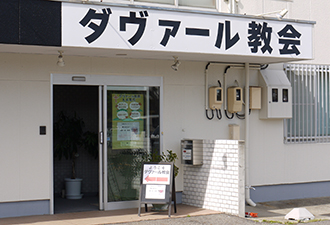
- Davar Church Nagoya Worship Place
- Registration Deadline: September 12 (Sat)

Theme
These words were spoken by God after the nation of Judah was destroyed for idolatry and its survivors were taken into captivity in Babylon. After King Cyrus of Persia issued his decree in 539 B.C., some exiles returned to Jerusalem and, despite hardships, rebuilt the Temple. However, under pressure from neighboring nations, Israel lost its former splendor and struggled to survive. Notably, the verbs in the verse above are in the feminine form; it addresses Jerusalem, personified as a woman.
Sing, O barren woman, you who never bore a child; burst into song, shout for joy, you who were never in labor; because more are the children of the desolate woman than of her who has a husband (v. 1).
Jerusalem is depicted as a barren, childless, and desolate woman, symbolizing her abandonment by her husband, the Lord Yahweh, due to the idolatry of her inhabitants. However, the command to “Enlarge the place of your tent” suggests that many children are about to be born and that she should expand her tent to accommodate them, giving them space to live.
For you will spread out to the right and to the left; your descendants will dispossess nations and settle in their desolate cities (v. 3).
In chapter 66 of the same Book of Isaiah, the birth of Jerusalem’s children is further foretold as follows:
Before she goes into labor, she gives birth; before the pains come upon her, she delivers a son. Who has ever heard of such a thing? Who has ever seen such things? Can a country be born in a day or a nation be brought forth in a moment? Yet no sooner is Zion in labor than she gives birth to her children (66:7-8).
First, one “son” is born; then, many “children” follow. As a result, a “nation” is brought forth. How did this prophecy come to be fulfilled upon Jerusalem? Do these “nation” and “children” symbolize the visible nation and people of Israel? Paul, speaking of the Jerusalem that pertains to us in Christ, calls it “the Jerusalem that is above” and states:
But the Jerusalem that is above is free, and she is our mother (Gal 4:26).
What does this mean for us today as we accept these words by faith as our spiritual reality? What mission has been given to us? Come, gather all who wish to join Jerusalem in shouts of joy and to be part of the curtains, cords, or stakes, united with one heart, in response to the command of the Lord of hosts: “Enlarge the place of your tent!”
Speaker
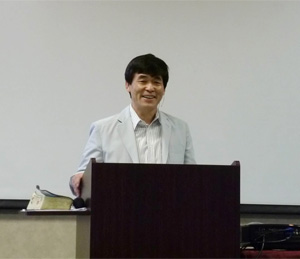
Rev. Toru Asai
Rev. Toru Asai was born in Japan in 1952. While pursuing a degree in physics at Nagoya University, he received God’s calling to come to the U.S. In 1982, he began attending Oral Roberts University in Tulsa, Oklahoma, with a major in Biblical Studies. He continued his graduate studies at Fuller Theological Seminary in Pasadena, California, and received an M.A. in Semitic Languages and a Th. M. in Old Testament Studies.
He taught Hebrew and Akkadian (also known as the Assyrian language) at Fuller Seminary as part of the adjunct faculty. He was ordained as a pastor in 1996 by Grace Fellowship Church in Tulsa, Oklahoma, and has been pastoring Davar Kingdom of God since 1996. His book “Kami no Katachi ni (In the Image of God)” was published by Japan Newspaper in 1994. He is married to wife, Masami and has one daughter, Jun.
Schedule
- Live streaming online and limited-time on-demand viewing are available. (Japanese)
- Those participating only via streaming or attending only part of the event in person should also register in the same way as those attending the entire event.
- The participation fee is the same for all participants, regardless of whether they attend the full program or only part of it, and regardless of whether they participate in person or via online streaming.
- Participants traveling from out of the area are responsible for making their own accommodation arrangements.
- Meals are not included in the participation fee.
Fee
- Adults (12 and older): ¥5,000 / US$30
- Children (ages 4–11): ¥2,500 / US$15
- Children 3 and under: Free
How to apply
Please email the completed registration form to campjapan@davar.org.
The seminar participation fee may be paid in USD via PayPal or in Japanese yen (cash) to the leader of your local branch.
If you have any questions about the Bible Seminar, please feel free to reach out to us at campjapan@davar.org.
Directions
Davar Church Nagoya Worship Place
愛知県名古屋市守山区四軒家2丁目315